

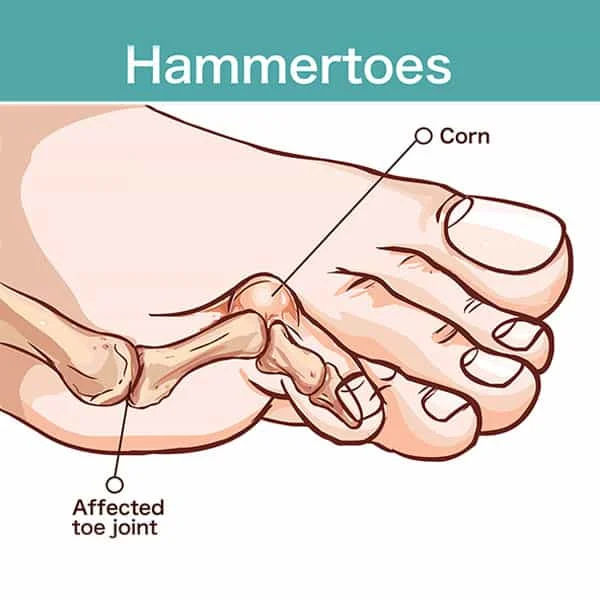


What Is a Hammertoe Deformity?
Hammertoe is a foot deformity that commonly affects the second, third, fourth, or fifth toes. In this condition, the toe is bent at the middle joint. A hammertoe deformity is typically a contraction of the toe caused by a muscular imbalance in the foot. This contracted position may become rigid over time, causing a permanent deformity that brings pain when wearing closed toe shoes, as the frictional forces of walking can cause a corn or callus to develop.
What Causes a Hammertoe Deformity?
There are several causes of a hammertoe deformity. Most often they are caused by the biomechanics of your foot; sometimes structural influences from the posterior calf muscles and knee can also affect gait and stride. Genetics may also play a role in developing hammertoes. Those with ligamentous laxity, arthritic conditions, or tendon injury are also prone to hammertoes.
Conservative Treatment Options for Hammertoe
This all depends on the flexibility of your hammertoe. There are several conservative treatment options that may help relieve symptoms and slow the progression of the condition. These include:
- Wearing properly fitting shoes: Shoes with a wide toe box and a small heel can help reduce pressure on the toes and relieve pain.
- Orthotics: Special inserts or pads can be used to cushion the affected area and help redistribute pressure on the foot.
- Toe exercises: Stretching and strengthening exercises for the toes and foot muscles may help improve flexibility and reduce pain.
It is important to note that while these treatments may provide relief for symptoms, they may not be able to correct the deformity itself. If conservative treatment options do not provide sufficient relief or the hammertoe continues to worsen, surgical intervention may be necessary.
When Would I Need Surgery for My Hammertoe?
If the nonsurgical treatment options above fail to provide relief and the pain is interfering with your daily activities, it is time to discuss surgical options with our foot and ankle surgeon.
This condition is progressive, so there are different surgical procedures for different stages of the deformity. These procedures depend on the severity of the condition and on individual factors such as age, overall health, and lifestyle. Some of the most common surgical procedures for hammertoe include:
- Joint resection (arthroplasty): A small portion of the affected joint is removed to help straighten the toe.
- Fusion (arthrodesis): The affected joint is fused together to help straighten the toe and prevent further deformity.
- Screw insertion: In some cases, a small screw may be inserted to help stabilize the joint and improve alignment.
It is important to discuss the risks and benefits of surgery with your doctor to make an informed decision about your treatment plan. Come in for a consultation at PS Foot and Ankle and we can provide a personalized plan.