

Warts and Plantar Warts in Bridgewater NJ

Understanding How Warts Spread, How They Are Treated, and How to Prevent Them

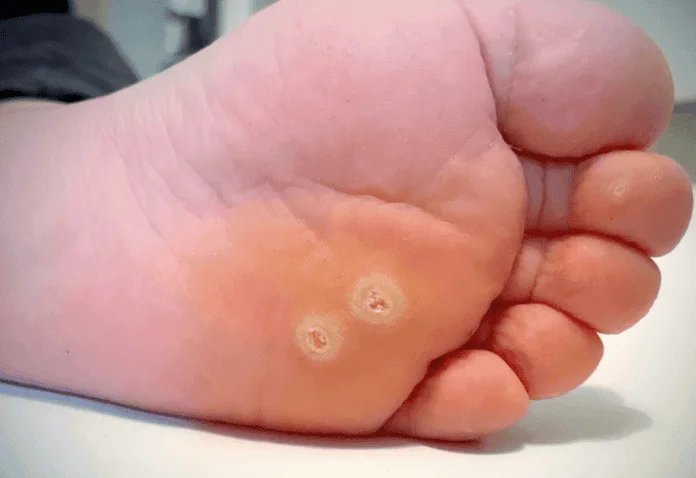
Close-up of plantar warts on the sole of the foot in Bridgewater NJ

Warts are common skin growths caused by a virus. Understanding their true nature and how they spread is key to effective treatment and, ideally, prevention.

The Viral Culprit: Human Papillomavirus (HPV)

The fundamental truth about warts, whether they appear on your hands, feet, or anywhere else on your body, is that they are caused by a virus: the Human Papillomavirus (HPV). This isn't just one virus, but a family of over 200 related viruses. Different types of HPV tend to cause warts on different parts of the body. For example, certain types are responsible for plantar warts (on the soles of the feet), while others cause common warts on hands or flat warts on the face.

The Contagious Nature of Warts

Because warts are viral, they are inherently contagious. HPV spreads through direct skin-to-skin contact or by touching surfaces contaminated with the virus. This is why public places, especially those where people walk barefoot or share equipment, can be hotspots for transmission.

These hotspots include public indoor and outdoor swimming pools, health club pools, community aquatic centers, hotel swimming areas, and water parks. Gyms and fitness studios with shared locker rooms, communal changing areas, and shared equipment are also common, along with community recreation centers, yoga or pilates studios with shared mats or props, and indoor sports complexes. Public locker rooms, communal showers, public restroom floors, and martial arts or dance studios, spas, and saunas can all facilitate spread. If you or your child frequent these or other local spots, it is wise to wear flip-flops or water shoes in wet areas and practice good hand hygiene, especially after touching shared surfaces.

Once the virus enters the skin through tiny cuts or abrasions, it can cause skin cells to grow rapidly, resulting in the characteristic bumpy appearance of a wart. The incubation period can vary widely, from a few weeks to several months, meaning you might not even realize you have been exposed until a wart suddenly appears.

Treatment Approaches: A Dual Perspective

Both podiatrists and dermatologists are highly skilled in treating warts, often employing similar methods tailored to the wart's location and severity.

From the Podiatrist's and Dermatologist's Chair: Focus on Warts

Podiatrists, like Dr. Sanghvi at PS Foot and Ankle, and dermatologists like Dr. Patel at PS Dermatology and Surgery (both at 245 Union Ave, Bridgewater, NJ), specialize in conditions affecting the feet and skin respectively. Plantar warts, which grow inwards due to the pressure of walking, can be particularly painful and challenging to treat. Podiatrists and dermatologists frequently use:

  • Cryotherapy: This involves freezing the wart with liquid nitrogen. The extreme cold destroys the infected cells, leading to a blister that eventually peels away, taking the wart with it. Multiple sessions are often required for complete resolution.
  • Topical Salicylic Acid: This is a common and effective over-the-counter and prescription treatment. Salicylic acid works by gradually dissolving the layers of the wart. Podiatrists can prescribe stronger concentrations than those available commercially, often combining it with debridement (careful shaving down of the wart) for better penetration and efficacy. This method requires consistent application over several weeks or months.
  • 5-Fluorouracil (5-FU): This is a topical chemotherapy cream that works by interfering with the growth of abnormal cells. It is often reserved for stubborn warts that haven't responded to other treatments and is applied carefully under medical supervision.
  • Other Topical Medications: Less common but possible options include other topicals such as imiquimod, which stimulates the immune system to fight the virus, cantharidin, which causes controlled blistering to destroy the wart, or topical cidofovir, which is an antiviral, against wart particles.
  • Surgical Excision and Curettage: In some cases, particularly for larger or resistant warts, your doctor might choose to scrape away (curettage) the wart or, in rare cases, surgically cut out (excision) the wart.

The Power of Prevention: HPV Vaccine

The most impactful way to combat the spread of warts, and more importantly, prevent HPV-related cancers, is through vaccination. The HPV vaccine (such as Gardasil 9) protects against the types of HPV that cause the vast majority of warts and cancers of the cervix, anus, throat, and other areas.

The Centers for Disease Control and Prevention (CDC) recommends routine HPV vaccination for preteens at ages 11 or 12, though vaccination can be started as early as age 9. Catch-up vaccination is also recommended for individuals through age 26 who haven't been fully vaccinated. While the vaccine is most effective when given before any exposure to the virus, even sexually active individuals can benefit by protecting them against HPV types they haven't yet encountered. Discussing the HPV vaccine with your primary care physician is a crucial step in proactive health for yourself and your family.

When to Seek Professional Help

While some warts may resolve on their own, or with over-the-counter treatments, it is always best to consult a professional for diagnosis and treatment. This is especially true if:

  • The wart is painful, bleeding, or changing in appearance.
  • You have multiple warts or they are spreading rapidly.
  • You have a weakened immune system.
  • You are unsure if the growth is a wart or something else.

For expert care for foot warts, reach out to Dr. Sanghvi at PS Foot and Ankle at 245 Union Ave in Bridgewater, NJ. For warts on other areas of the body, a dermatologist such as Dr. Patel at PS Dermatology and Surgery (also at 245 Union Ave, Bridgewater, NJ) can provide comprehensive diagnosis and treatment. Do not let warts linger, take control of your skin health.

Get Wart Treatment in Bridgewater NJ

If a wart is painful, spreading, or not clearing with over-the-counter care, the team at PS Foot and Ankle in Bridgewater, NJ can diagnose it and recommend the right treatment for you.

Frequently Asked Questions

What causes warts?

Warts are caused by a virus, the Human Papillomavirus (HPV). This is not just one virus but a family of over 200 related viruses. Different types of HPV tend to cause warts on different parts of the body, with certain types responsible for plantar warts on the soles of the feet and others causing common warts on hands or flat warts on the face.

Are warts contagious?

Yes. Because warts are viral, they are inherently contagious. HPV spreads through direct skin-to-skin contact or by touching surfaces contaminated with the virus, which is why pools, gyms, locker rooms, communal showers, and other shared spaces can be hotspots for transmission. Wearing flip-flops or water shoes in wet areas and practicing good hand hygiene helps reduce the risk.

How are plantar warts treated?

Podiatrists and dermatologists frequently use cryotherapy (freezing the wart with liquid nitrogen), topical salicylic acid, and 5-Fluorouracil (5-FU) cream. Other topical medications such as imiquimod, cantharidin, or cidofovir may be used, and surgical curettage or excision is an option for larger or resistant warts. The right approach is tailored to the wart's location and severity.

Can warts be prevented?

The most impactful way to combat the spread of warts, and more importantly to prevent HPV-related cancers, is through vaccination. The HPV vaccine, such as Gardasil 9, protects against the types of HPV that cause the vast majority of warts. The CDC recommends routine HPV vaccination for preteens at ages 11 or 12, and it can be started as early as age 9, with catch-up vaccination recommended through age 26.

When should I see a doctor about a wart?

While some warts may resolve on their own or with over-the-counter treatments, it is best to consult a professional if the wart is painful, bleeding, or changing in appearance, if you have multiple warts or they are spreading rapidly, if you have a weakened immune system, or if you are unsure whether the growth is a wart or something else.

Call PS Foot & Ankle 732-443-3975